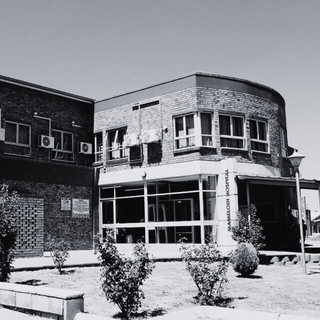

Published for the Go Turquoise for the Elderly Campaign | 15 May – 15 June
From 15 May to 15 June, communities across South Africa wear turquoise to draw attention to the older people in our families, neighbourhoods, congregations and hospital wards. The Go Turquoise for the Elderly Campaign is a month-long call to compassion: a reminder that as our population ages, we must actively advocate for the rights, dignity and well-being of older persons — ensuring they receive the care, support and respect they deserve (Bluecollar Occupational Health, 2025).
At HospiVision, this campaign sits very close to our hearts. Every week, our volunteers, pastors and counsellors walk alongside elderly patients in public hospitals — patients who often arrive alone, frightened, and carrying decades of unspoken story.
A Country Growing Older
South Africa is ageing. According to Statistics South Africa, the number of persons aged 60 years or older grew from 3.6 million (7.7% of the population) in 2002 to 6.6 million (10.5%) in 2025 — an increase of three million people over twenty-three years (Stats SA, 2026). The shift is shaped by declining fertility rates, longer life expectancy, and improvements in overall living conditions.
But growing older in South Africa is not the same experience for everyone. Older South Africans are predominantly female — for every 100 older women, there are only 65 older men — and older women are more likely to be widowed, to have fewer financial resources, and to carry a heavier caregiving burden, often raising grandchildren in extended households (Stats SA, 2026).
Life expectancy itself reflects deep inequality: 69.6 years for women and 64.0 years for men (Stats SA, 2026). Hypertension, diabetes and arthritis dominate older persons' health needs, and 68.5% of older South Africans rely on public hospitals and clinics — the very settings where HospiVision serves.
The Quiet Crisis: When the System Falls Short
Behind the statistics lies a more painful truth. In its 2023 report, "This Government is Failing Me Too," Human Rights Watch found that South Africa is failing to provide hundreds of thousands of older people with basic care and support services. Many face risks to their physical safety and live in profound fear at the prospect of being forced to live, and die, in an institution (Human Rights Watch, 2023).
The report documents how the Older Persons Act — a post-apartheid law guaranteeing the rights of older persons to community- and home-based care — remains poorly implemented. The Grant-in-Aid, designed to cover the cost of full-time home-based care, provides just R500 per month — less than the cost of a single day of care at the national minimum wage. Many older persons do not even know the grant exists (Human Rights Watch, 2023).
One older woman interviewed in the report, who had waited forty years for state-subsidised housing, summed it up in a single sentence: "The previous government failed me, and now this government is failing me too" (Human Rights Watch, 2023).
Elder Abuse: A Hidden Wound
The South African Government has acknowledged the growing concern around violence and abuse against older persons — "the most vulnerable members of our nation, who should be protected, are instead being mistreated, neglected, victimised and abused" (Naicker, 2024).
Elder abuse takes many forms:
-
Physical and sexual assault, often signalled by unexplained injuries
-
Emotional and psychological abuse — patterns of insults, degradation and humiliation
-
Financial exploitation, where pensions and grants are taken by those entrusted with care
-
Neglect, where basic needs go unmet
Tragically, these violations are most often carried out by family members, caregivers or other trusted individuals (Naicker, 2024). All of these acts are criminal offences under the Older Persons Act.
In hospital settings, our volunteers, pastors and counsellors are trained to recognise the signs. Older patients may present with emotional distress or spiritual struggles that seem disproportionate to their current medical condition. Ageing can strip away lifelong coping mechanisms, causing trauma from decades ago to resurface — and current abuse may be hidden behind silence and shame. The pastoral response is gentle attention: listening to a patient's life narrative is one of the most powerful ways to restore dignity, purpose and spiritual connection (HospiVision, 2026).
Why Turquoise?
The turquoise ribbon symbolises compassion and support for the elderly community. Wearing it is a small gesture with a large purpose: it sparks conversation, it signals solidarity, and it reminds everyone — from family members to policymakers — that older persons are not invisible (Bluecollar Occupational Health, 2025).
But a ribbon is only the beginning. The campaign also calls for:
-
Raising awareness of the challenges older persons face — social isolation, health and mobility issues, barriers to healthcare, cognitive decline, abuse and neglect
-
Encouraging compassion through simple acts — checking in on a neighbour, visiting a relative, volunteering at a senior centre
-
Promoting inclusivity — building a society where older adults are valued and respected
-
Empowering seniors to advocate for their own needs and rights
(Bluecollar Occupational Health, 2025)
How HospiVision Walks Alongside Older Persons
In every hospital where we serve, our volunteers, pastors and counsellors offer what we call the ministry of Sinawe — steady, faithful companionship. For many elderly patients, the loneliness of a hospital bed is heavier than the illness itself. We sit. We listen. We pray. We bear witness to lives that have shaped families, communities, and the very country we live in.
Our pastoral work with older patients includes:
-
Bedside companionship — combatting the social isolation that so often follows hospitalisation
-
Spiritual care and prayer in the patient's own faith tradition
-
Life-story listening — restoring dignity by honouring a patient's history
-
Family and bereavement support — walking alongside loved ones through end-of-life care
-
Alertness to abuse and neglect — and appropriate referral when concerns arise
-
Skills training for hospital staff in pastoral and spiritual care for older patients
How You Can Get Involved
This Go Turquoise month, we invite our HospiVision community — supporters, volunteers, donors, partners — to take action:
-
Wear turquoise. Share a photo on social media and tag @HospiVision. Use the hashtags #GoTurquoiseForTheElderly #HospiVision #TouchingLivesGivingHope.
-
Visit an older person in your family, congregation or neighbourhood. Bring tea. Stay an hour. Ask them to tell you a story.
-
Volunteer with HospiVision at one of our hospital sites — Steve Biko Academic Hospital, Tygerberg Hospital, Weskoppies, Vredenburg, or our other partner facilities.
-
Report abuse. If you suspect an older person is being mistreated, contact your nearest police station or the GBV Command Centre on 0800 428 428 (Naicker, 2024).
-
Donate to HospiVision and help us extend pastoral care, trauma counselling and bereavement support to more elderly patients in public hospitals. Visit www.hospivision.org.za to give.
-
Advocate. Speak up about the inadequate implementation of the Older Persons Act and the urgent need for community- and home-based care services.
A Final Word
Every older person in our hospitals carries a lifetime of stories — of apartheid resistance, of children raised, of communities built, of love and loss and faith. Many of them, as Human Rights Watch reminds us, "sacrificed so much for South Africa's freedom" (Human Rights Watch, 2023). They deserve more than a system that fails them. They deserve our presence, our protection, and our profound respect.
At HospiVision we believe every life bears the image of God and carries eternal value — and that older persons must never be excluded or left behind, especially the poor, the frail and the marginalised. This Go Turquoise season, will you stand with us?
#TouchingLivesGivingHope
Sources
-
Bluecollar Occupational Health. (2025). Go Turquoise for the Elderly Campaign. Retrieved from https://bluecollarocc.co.za/go-turquoise-for-the-elderly-campaign/
-
Human Rights Watch. (2023, 27 June). South Africa: Older People Lack Basic Care, Support. Retrieved from https://www.hrw.org/news/2023/06/27/south-africa-older-people-lack-basic-care-support
-
Naicker, A. (2024, 28 October). Protecting the elderly in our communities. South African Government. Retrieved from https://www.gov.za/blog/protecting-elderly-our-communities
-
Statistics South Africa. (2026). South Africa's Older Population: A Growing Group Facing Shifting Realities. Retrieved from https://www.statssa.gov.za/?p=19307
-
Statistics South Africa. (2025). Is South Africa Growing Older? The Unseen Shift in Our Population. Retrieved from https://www.statssa.gov.za/?p=18056
-
Age-in-Action. Working with and for older persons. Retrieved from https://age-in-action.co.za/
-
The Borgen Project. Elderly Poverty in South Africa: Progress. Retrieved from https://borgenproject.org/elderly-poverty-in-south-africa-progress/
- Republic of South Africa. (2006). Older Persons Act 13 of 2006. Department of Justice and Constitutional Development. Retrieved from https://www.justice.gov.za/legislation/acts/2006-013_olderpersons.pdf